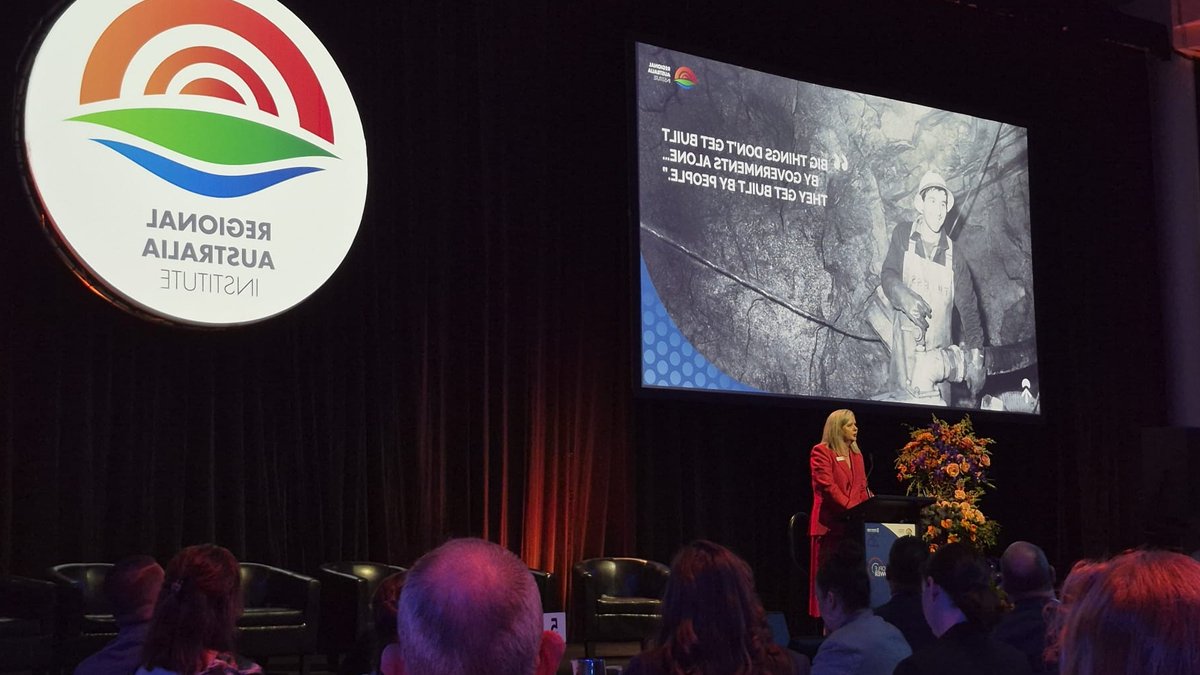
The public health researcher attending the Regions Rising National Summit in Parliament House this week observed a sharp divide between how migration is portrayed in policy discussions and the realities faced by migrants in regional Australia. The event, which drew over 400 participants, framed skilled migrants almost entirely as a solution to labour shortages, neglecting the social and racial factors that influence their integration.
Regional Institute Links Migration to Workforce Needs
The Regional Australia Institute, which hosted the summit, has established itself as the country’s leading research body on regional development. Its 2026 Regional Population Planning Report directly links migration to workforce needs and aging demographics. In her opening address, CEO Liz Ritchie emphasized migrants’ role in infrastructure projects, citing a worker involved in the Snowy Mountains Hydro scheme. She stated that large-scale projects get built by people power.
Yet the summit’s focus on economic contributions overlooked critical issues like racism—a gap noted by Penelope Smith, a PhD candidate studying migrant health workers in regional settings. While speakers such as Kristy McBain and Migration Institute of Australia CEO Peter van Vliet criticized recent government restrictions on regional visas—including pauses on working holiday visas and reduced priority for regional migration—the topic of racial discrimination received no attention.
Industry Groups Push for Visa Reversals
Van Vliet highlighted appeals from groups like the National Farmers Federation and Australian Dairy Farmers, which have called for visa policy reversals. A 2024 Grattan Institute report suggesting regional migration may limit long-term career prospects was also mentioned as a possible factor in policy adjustments.
During a panel on regional productivity, discussions about childcare workforce shortages revealed another issue: many essential roles, such as aged care or early education, do not qualify as “skilled” under visa categories that regional areas depend on. The panel recognised that regional migration is different from migration to cities, and that when local communities put support in place for new migrants, both from within Australia and from overseas, successful outcomes are more likely.
Racism Overlooked Amid Economic Focus
Smith found the exclusion of racism particularly striking. As someone who works with newly arrived migrants and First Nations communities, she argued that framing migrants solely as workers, rather than as individuals with families and rights, limited meaningful debate. The event’s theme, People Power, offered a perfect framing opportunity for what could be done, together, to address the prevalence and impacts of racism. Yet this moment was overshadowed by the dominant narrative: migration as an economic solution, not a social or ethical priority.
Smith contrasted the summit with a recent Democracy in Colour Racial Justice Network retreat, where discussions centered on dignity and systemic barriers. At the regional summit, however, racism was effectively ignored, despite hints from speakers that the topic should be raised.
A Welcome to Country by Ngunnawal Elder Aunty Violet Sheridan briefly shifted the focus. She called for patience and inclusion, explicitly mentioning asylum seekers, a rare acknowledgment of migrants beyond their labor contributions.
The Regional Population Planning Report reinforced this perspective, stating that migration is now essential for regional population growth and recommending increased overseas migration to the regions. Ritchie’s closing remarks echoed this urgency: “We must harness our collective strength to overcome political obstacles and attract the talent we need.”
Smith left the summit questioning why racism, both as a settlement barrier and a policy driver, was absent from the conversation. The answer, she believed, lay in how migrants were being treated: not as people with rights, but as tools for economic survival.
National Leaders Weigh Migration’s Role
The summit’s policy discussions coincided with broader debates about Australia’s immigration approach. In a National Press Club speech, Minister Tony Burke addressed housing shortages and the economic necessity of migration for both regional and urban areas, framing it as vital to national prosperity. His remarks followed a Grattan Institute analysis questioning whether recent migration reforms would withstand political scrutiny or effectively address labor gaps. Demographer Peter McDonald separately criticized policy shifts for reflecting short-term political decisions over long-term planning, particularly in how regional migration programs were deprioritized despite industry demands for relief.
Meanwhile, former Immigration Minister Philip Ruddock and journalist Anthony Brewster are set to release Nation Building: How Immigration Made Australia, examining immigration’s role in shaping the country’s identity. Ruddock has previously noted that Pauline Hanson’s political influence “challenged Australia’s multicultural settlement” and contributed to mainstreaming racism, according to Politico’s Canberra Playbook. The book’s release aligns with ongoing tensions between economic reliance on migrant labor and the social challenges of settlement, including persistent racial discrimination often overlooked in migration policies.
Smith’s observations reflected a broader disconnect between policy discussions and migrant experiences. While speakers emphasized economic contributions, such as the example of a migrant worker on the Snowy Mountains Hydro scheme, systemic barriers faced by migrants were ignored. The omission left unanswered how regional communities could better support migrants beyond their labor roles, particularly for those in healthcare or early education who may not qualify for skilled migration visas.