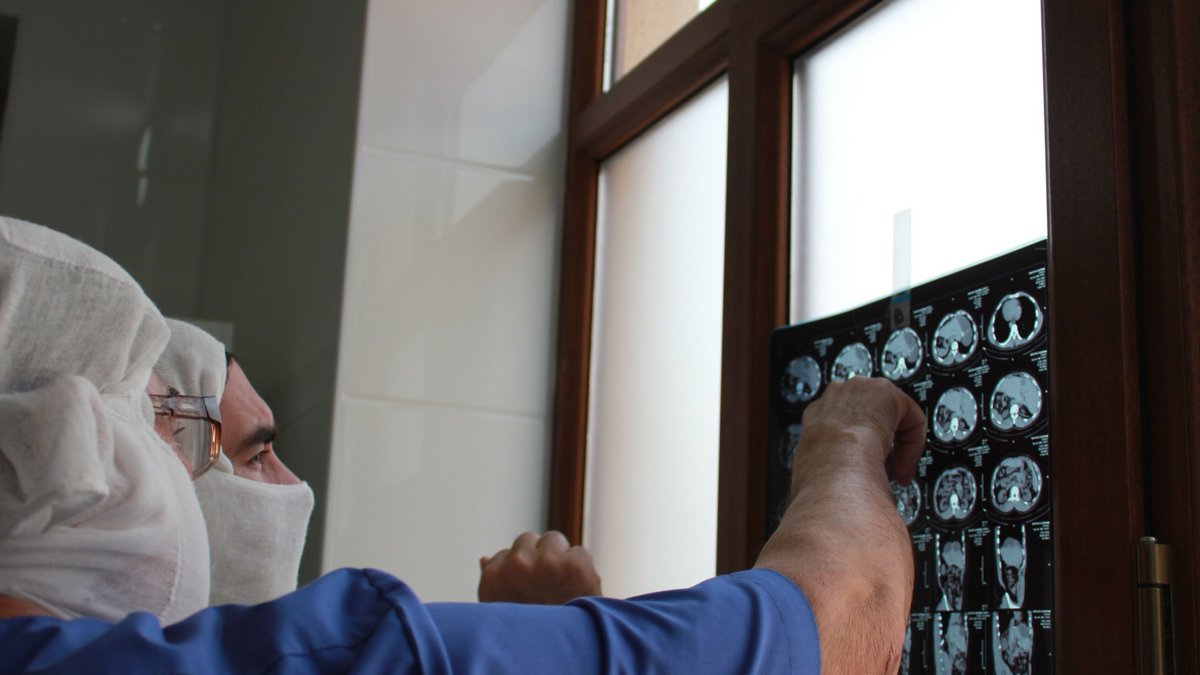
A radiologist in an emergency department treating a patient with severe abdominal pain has no time for delays. Every second counts when deciding whether surgery is needed, as hesitation can lead to life-threatening complications. Researchers at the University of Colorado Anschutz School of Medicine have now created an AI system designed to eliminate delays in ultrasound interpretation—particularly for right upper quadrant (RUQ) scans, which examine critical organs like the liver, gallbladder, and right kidney.
Their solution is a vision-language AI agent that processes ultrasound images alongside lab results and clinical notes to generate preliminary reports. The AI does not replace radiologists but automates the time-consuming task of report writing, allowing experts to focus on complex cases instead.
Radiologist shortages worsen delays in critical scans
RUQ ultrasounds are among the most frequently requested imaging tests for abdominal pain, raised liver enzymes, or suspected biliary issues. These scans are quick, non-invasive, and capable of detecting conditions ranging from gallstones to liver tumors. However, interpretation is far from simple. Scans often contain visual interference, and even experienced radiologists may overlook subtle abnormalities. The situation is worsened by a severe radiologist shortage—specialists are leaving the field at twice the 2014 rate—leaving hospitals overwhelmed. Medicare reimbursements for report writing have also failed to keep up with rising demand, exacerbating the problem.
Harrison Bai, M.D., M.S., the study’s lead author, describes the challenge bluntly: “There aren’t enough people or radiologists to do the work, and there’s decreasing reimbursement by Medicare insurance,” Bai says. His team developed the AI to manage the repetitive yet time-intensive aspects of ultrasound interpretation. The model was trained on over 11,000 RUQ ultrasounds from Stanford, Johns Hopkins, and the University of Colorado before being tested on 100 manually reviewed reports. In that sample of reports, the VLM identified the correct diagnoses in each ultrasound 99.6% of the time. The VLM made some mistakes in the overall reports, but these mistakes were easy to catch for the radiologists who reviewed and edited the reports.
AI reports fool experts, when edited
While the experts could pick out unedited, VLM-written reports, most of the time, they could not tell the radiologist-edited VLM reports apart from the reports written by radiologists. The tool’s primary advantage lies in its ability to standardize interpretations, reducing discrepancies between less-experienced and highly trained readers while accelerating emergency decisions.
Related Post: Nurses Take Center Stage as Tech Transforms Care
The AI system goes beyond image analysis by incorporating lab data, patient history, and clinical guidelines. For instance, if an ultrasound suggests cholecystitis, a condition requiring immediate surgery, the AI can flag it as urgent, potentially shaving hours off treatment time. Bai emphasizes that the system is meant to assist, not replace, radiologists. “We’re not trying to build an AI radiologist,” Bai says. “But if our AI agent can write up preliminary reports, it saves radiologists time.” And time is of the essence, especially in the case of a medical emergency: Bai and his team’s new AI tool can also rapidly identify patients who may need emergency surgery so they can get to the operating table as quickly as possible.
Limits and next steps for real-world use
The model is designed to identify 16 common RUQ diagnoses, estimate prognoses, and draft reports; but final approval remains with human experts. Despite its high accuracy, researchers stress that real-world testing in emergency settings is essential. They must determine whether AI-assisted workflows improve patient outcomes beyond mere efficiency gains.
The study suggests that AI has a real place in supporting radiologists without eliminating the need for their expertise. Bai says he doesn’t expect AI to replace the need for human supervision in medicine, and he knows it will take time for doctors to adapt to using the technology, but he thinks it could change the course of medicine for the better. “I can see this technology playing a huge role in how medicine is practiced,” he says. “It will involve a lot of change and learning about new things. But I’m super excited.
I want to see these developments not just happening in my lab, but also incorporated into daily practice to help patients and doctors.” Haiman Guo et al., A multitask framework for automated multi-frame right upper quadrant ultrasound interpretation and clinical decision support, Nature Communications (2026). DOI: 10.1038/s41467-026-77498-w Bachelor’s in mathematical biology, Master’s in creative writing. Well-traveled with unique perspectives on science and language. Vision-language AI agent could help radiologists interpret ultrasounds faster and more accurately (2026, November 1) from https://medicalxpress.com/news/2026-10-vision-language-ai-agent-radiologists.html This document is subject to copyright.