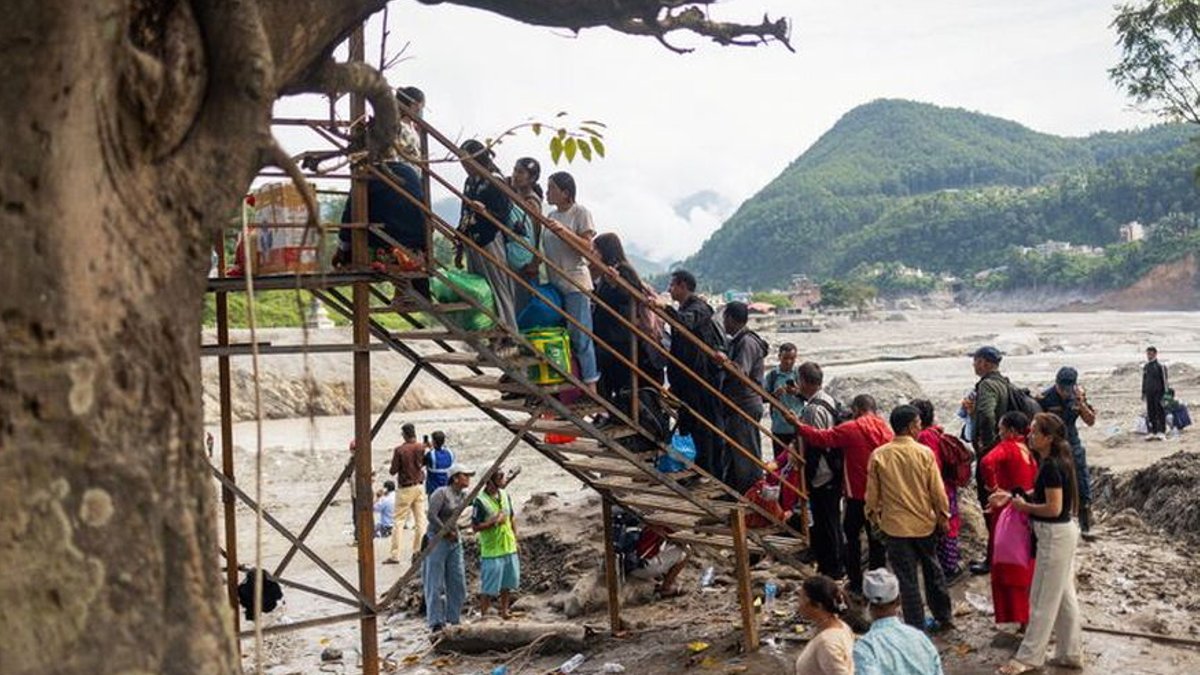
The devastating flood in Nepal last week could result in commercial insurance losses exceeding 20 billion Nepali rupees ($132.3 million), according to a top official at one of the country’s leading insurers. Oriental Insurance Company Nepal, a unit of the New Delhi-based Indian insurer, has identified hydropower projects as the primary source of these potential losses.
Infrastructure Damage in the River Corridor
Eleven Nepali hydropower projects lie in the affected region, with assessments still ongoing at five others. Toton Chakraborty, CEO of Oriental Insurance Nepal, told Reuters that projects including Rasuwagadhi, Upper Trishuli-3A, Chilime, and Devighat were directly affected. He noted that in many cases, access roads and above-ground infrastructure have been washed away.
The insurance cover, when paid out, covers losses borne by the operators of the power plants. Meanwhile, life insurance, personal accident, and workers’ compensation claims are expected separately as authorities verify deaths and missing persons in inaccessible areas.
Broader Economic Impact
The disaster on Nepal’s border with China’s Tibet region caused an estimated $2.56 billion in economic losses in the Himalayan nation of 30 million people, the country’s disaster authority chief told Reuters on Friday. The official confirmed that more than 1,200 people are dead, with many others missing.
Related: Rural Health Plan Lacks Transparency Critics Claim
Data from the Nepal Insurance Authority shows the regulator has so far received 583 flood-related claims worth 25.87 billion Nepalese rupees ($171.13 million) as of August 31. Chakraborty said these figures largely reflect insured exposure rather than final claims, which will only be clear once detailed surveys are completed. Claims could rise further if repairs delay project commissioning, as some policies compensate developers for lost revenue resulting from postponed commercial operations.
Nepal’s non-life insurance market is small by global standards. The country’s 14 non-life insurers generated premiums of about 5.3 billion Nepali rupees ($35.06 million) during July-August, regulatory data showed, compared with 314 billion Indian rupees ($3.3 billion) written by Indian insurers during a similar period. The market is supported by domestic reinsurers Nepal Re and Himalayan Re, alongside international players including India’s GIC Re and Germany’s Hannover Re.
Insurers may increasingly impose exclusions, lower sub-limits and narrow coverage, resulting in higher premiums and more selective underwriting, said Benjamin Ng, power leader for Asia at Aon, an international insurance broker. The Himalayan region faces severe risks from earthquakes and any future glacial floods, a senior U.N. official told Reuters this week.
Other recent Himalayan catastrophes include the 2023 glacial lake outburst flood in India’s Sikkim and the flash flood in the northern Indian state of Uttarakhand in 2021. The latest floods could reshape industry views on risk accumulation and glacial lake outburst flood exposure, said Sanjay Mokashi, chief underwriting officer at Indian state-owned reinsurer GIC Re.