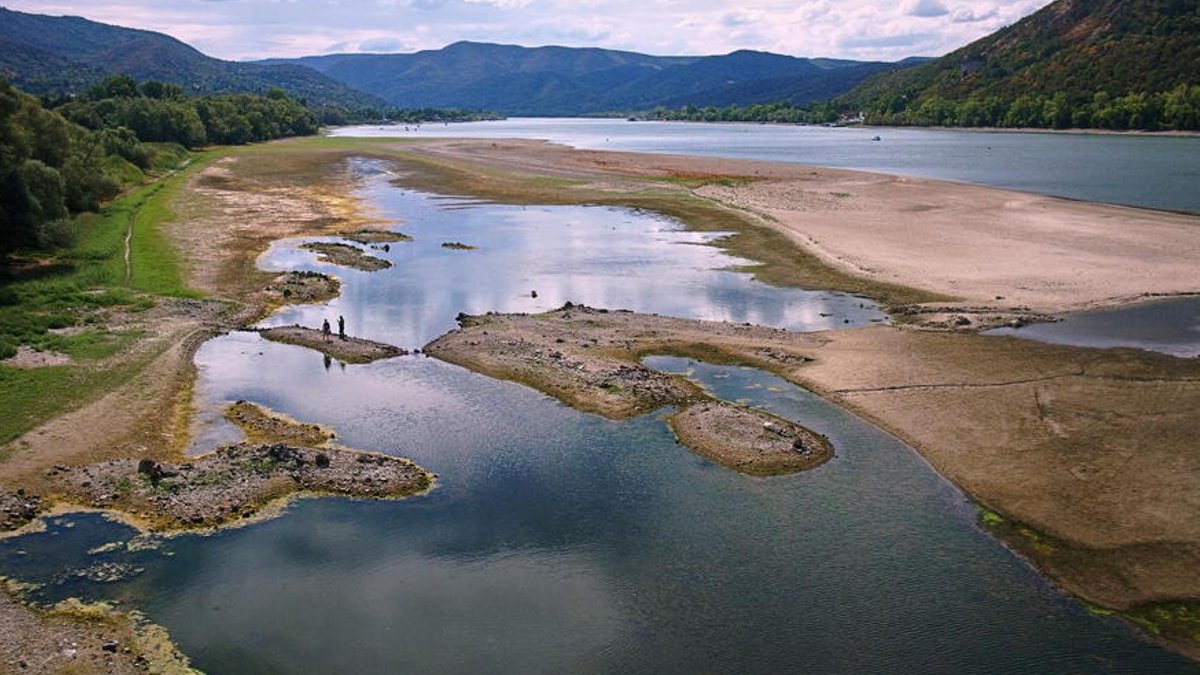
Hungary is facing a severe water crisis due to prolonged droughts and climate change-driven heat waves. The country’s third-largest lake, Lake Velence, has reached record low water levels, with the water receding to around 20 centimeters, well below the 150 centimeters optimal for August.
Árpád Selmeci, a 58-year-old fisherman, said operating even a small fishing boat on the lake is becoming increasingly difficult. Swimming beaches across the lake have been closed, and the lack of rainfall has damaged crop yields, led to drinking water shortages, and threatened to shut down the country’s only nuclear power plant.
Around 99% of Hungary’s lands are currently under severe or extreme drought conditions, according to the national meteorological service. The country’s long-standing practice of channeling water away from its natural environment and draining wetlands has left it especially vulnerable as droughts become more frequent and severe.
A 2023 study published in the journal Nature estimated Hungary’s historical wetland loss at more than 80%. Zsuzsanna Ujj, a biodiversity policy specialist, said Hungary has not been a good steward of its waters in the last 200 years.
Hungary’s network of more than 40,000 kilometers of drainage canals has contributed to a consistent drop in the water table and the drying out of wetlands and topsoil. With less water available to evaporate, the air dries out, further reducing the chances of localized precipitation.
The drying out of Hungary isn’t limited to streams and wetlands. Lake Garancsi, a small recreational lake, has shrunk dramatically in recent years, and most of the former lake bed is now exposed, cracked, and dry. What remains of the water is so shallow and warm that all of the fish and most of the other wildlife have disappeared.
Related: AI Bridges Talent Gaps Without Hiring More Staff
Zoltán Mettner, who runs the Glass Tiger bar on the shores of the lake, said conditions have gotten worse every year. Authorities have predicted that no water will be left by the end of summer.
The situation is a result of human-driven climate change and the country’s poor water retention practices. Ujj said that Hungary needs to realign its water management practices, shifting from a drainage-based approach to one focused on water retention.
Restoring wetlands and increasing evaporation in certain areas could help boost precipitation during the summer months. This approach could help mitigate the effects of drought and reduce the risk of more frequent and intense floods.
Hungary’s new government has promised to begin taking steps to address the water crisis.
The Danube River, the European Union’s longest river, has set successive records this summer for low water levels, threatening to shut down Hungary’s only nuclear power plant.
The situation in Hungary serves as a reminder of the importance of water conservation and the need for sustainable water management practices. As the country moves forward, it will be important to monitor its progress and adjust its approach as needed to ensure a more resilient and sustainable water management system, which could involve increasing the defence budget for water-related projects.