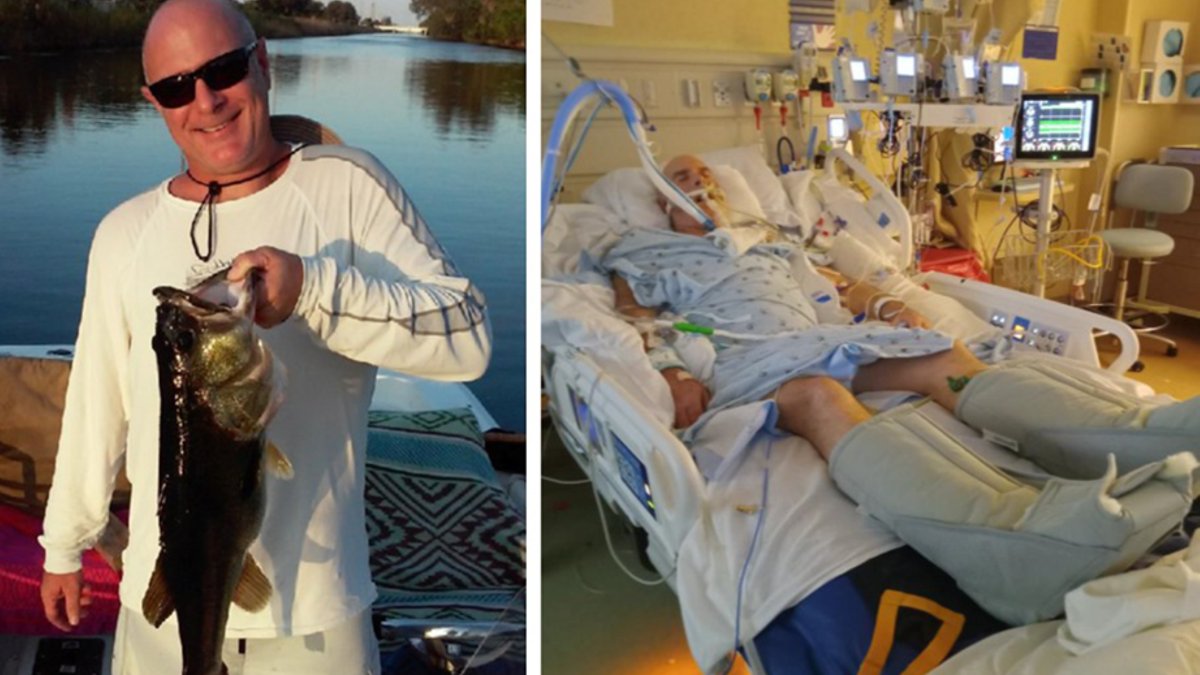
Greg McKenzie, a 59-year-old from West Palm Beach, Florida, is breathing fresh air on his own again. One year after a lung transplant at Mayo Clinic, he reflects on a journey from active health to oxygen dependence and back. This transformation is a sign of both medical expertise and personal resilience, as McKenzie handled a complex path to recovery.
McKenzie, an account manager, had always been active. He played basketball, ran, fished, and even surfed. But shortness of breath began to slow him down, a symptom he initially attributed to aging. In January 2025, chest pain sent him to the emergency room, where doctors ruled out a heart attack but diagnosed interstitial lung disease. This condition, characterized by inflammation and scarring in the lungs, progressively hindered his ability to breathe and engage in physical activities.
From Active to Oxygen-Dependent
As the disease advanced, McKenzie’s health deteriorated rapidly. He became reliant on supplemental oxygen for even the simplest tasks, such as walking or carrying items. A lung biopsy further complicated his condition, causing both lungs to collapse, which led to hospitalization. During a critical appointment on November 3, 2025, at Mayo Clinic in Florida, he learned his condition had worsened to the point of requiring immediate hospitalization, showing the urgency of his situation.
Doctors informed him that a lung transplant was his only viable option. Weakened and unable to walk without oxygen, he was referred to Mayo Clinic, where he was approved for the procedure. This marked the beginning of a challenging but hopeful chapter in his life.
Transplant and Recovery Challenges
McKenzie’s journey to transplantation was not without hurdles. He experienced several false starts, where potential donor lungs were deemed unsuitable. Finally, a viable match was found, and he underwent surgery on November 9, 2025. Dr. Maher Baz, a transplant pulmonologist, played a key role in his care team, guiding him through the complexities of the procedure and recovery.
This vulnerability made McKenzie’s post-transplant challenges particularly daunting.
Following the surgery, McKenzie faced significant complications, including aspiration after choking on breakfast, a blood clot that traveled from his leg to his lung, and two episodes of organ rejection. Dr. Baz notes that such challenges are typical in the first year post-transplant. Despite these setbacks, McKenzie remained determined, supported by his mother, who stayed with him at the Gabriel House of Care, a specialized housing unit for transplant recipients at Mayo Clinic.
A New Lease on Life
McKenzie’s progress exemplifies this success, as he has regained independence and is no longer reliant on supplemental oxygen.
Today, McKenzie focuses on rebuilding his strength, walking briskly for 30 minutes twice daily, and continuing rehabilitation exercises. Although he has not yet returned to running or playing sports, he is grateful for the strides he has made. “The transplant was a huge success,” he says.
For McKenzie, recovery transcends physical milestones. It is about reclaiming time—time with his mother, who lives next door, and his son. As Thanksgiving approaches, he expresses gratitude for his family, his donor family, and the Mayo Clinic team.
Mayo Clinic, a leader in lung disease treatment, boasts the nation’s top-ranked lung transplant program for one-year graft survival, according to the July 2026 Scientific Registry for Transplant Recipients report. This achievement shows the clinic’s commitment to advancing patient care and outcomes in the field of transplantation.