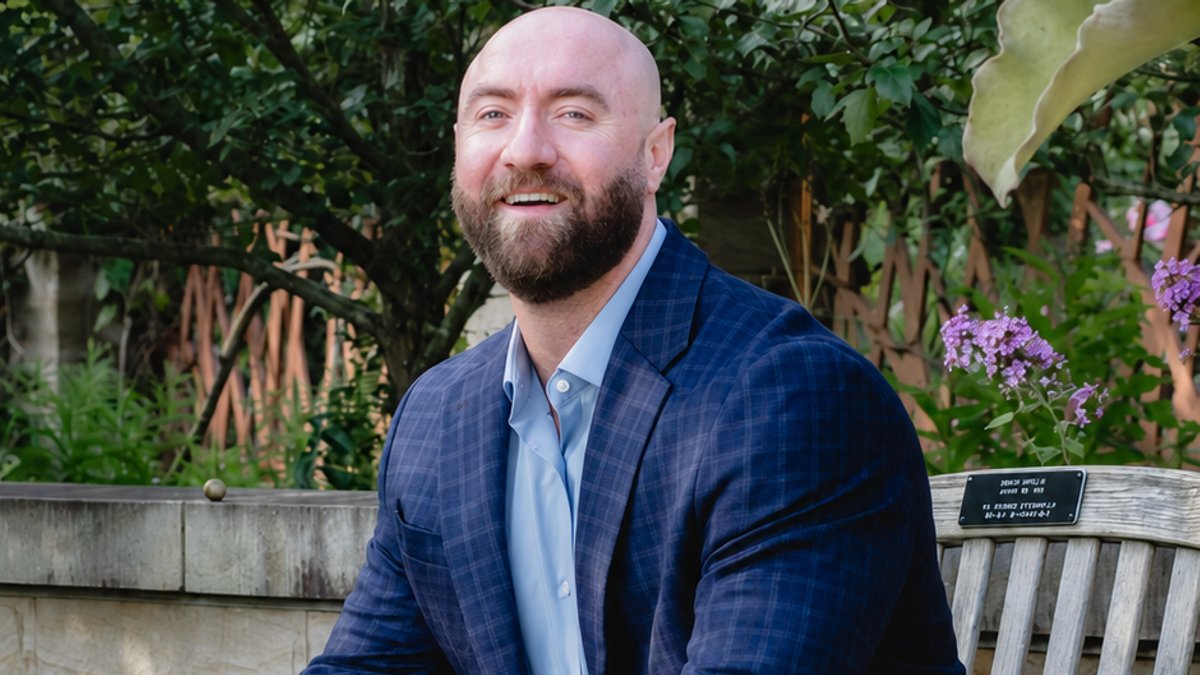
Chris McNaughton’s life was disrupted by severe ulcerative colitis and, years later, a rare infection. Mayo Clinic teams brought specialists together to find answers and tailor treatment, helping him return to law school with a new purpose: advocating for other patients.
Chris came to Mayo Clinic after ulcerative colitis had taken over his life, causing frequent bloody diarrhea, significant pain, and little energy. He lost 40 pounds, stopped playing college basketball, and took a medical leave from school after more than a year of treatments failed to control his symptoms.
Chris’ mother, Janice Light, described the situation: “Chris was alive, but he had no life. He was a prisoner in our home. He had no hope for the future. He was in a dark place — we all were.”
Complex Health Needs Required Coordinated Expertise
Chris and his parents researched IBD experts and found Dr. Edward Loftus, a gastroenterologist at Mayo Clinic in Rochester, Minnesota. They decided to take a chance and drove 14 hours from Pennsylvania to Minnesota.
Dr. Loftus learned about Chris, including his treatment concerns and preferences. “Loftus made me feel like there was hope and options that could help me have a better quality of life,” says Chris.
Dr. Loftus focused not only on controlling Chris’s UC but also on the complications that had developed during prolonged treatment. He brought in Dr. Irina Bancos, a Mayo Clinic endocrinologist, to evaluate Chris’ hormone problems.
“We have virtually every healthcare specialty at Mayo Clinic, so I’m fortunate to work with great specialists who collaborate closely to care for our patients,” says Dr. Loftus. The collaboration gave Chris a treatment plan that accounted for his UC, endocrine needs, and personal goals.
In 2018, Chris’s ulcerative colitis was in remission, and he had tapered off steroid medication. “It was a significant time investment driving from Pennsylvania to Rochester several times a year, but the amount of time that I saved by getting the best care saved me far more time in the long run,” says Chris. “When I got into UC remission, I joked with Dr. Loftus that if I knew this was going to happen, I would have walked from Pennsylvania to Rochester in the middle of winter!”
Chris’ case later informed 2024 clinical practice guidelines for glucocorticoid-induced adrenal insufficiency, which were championed by Dr. Bancos, who served on the guideline-writing panel. “The goal is not simply to treat a disease but to develop an individualized treatment plan that supports patients’ goals rather than limiting them,” says Dr. Bancos.
A Rare Infection Brought the Team Together Again
Years later, in the fall of 2023, Chris became seriously ill again. Surgery at another hospital revealed a mass in his chest involving structures around his airways, esophagus, and heart. Because of the complexity of his case and medical history, his care was transferred to Mayo Clinic.
Dr. Jeremy Clain, a Mayo Clinic pulmonologist, coordinated a multidisciplinary effort to determine what was causing the mass. Mayo Clinic infectious diseases specialists Dr. Jack Mc Hugh, Dr. Madiha Fida, and Dr. Maryam Mahmood reviewed Chris’ history and pursued testing, but initial studies were unrevealing.
Tissue from the chest was sent for specialized review by Dr. Bobbi Pritt, a Mayo Clinic pathologist and infectious diseases specialist, who identified evidence consistent with Nocardia, a type of bacteria that can cause nocardiosis.
“This kind of collaboration is what Mayo Clinic does really well,” says Dr. Mc Hugh. “In a complicated case like this, the answer usually does not come from a single test or a single specialist. It comes from people across different fields comparing notes, questioning possibilities, and putting the clues together.”
The infectious diseases team needed to select antibiotics that could treat nocardiosis while accounting for Chris’ nausea, other medications, immunosuppressive UC treatment, and endocrine conditions. The team worked with Dr. Loftus and Dr. Bancos to manage Chris’ UC without worsening his risk of infection and to meet his steroid and hormone needs.
“What impressed me the most about how Mayo Clinic approaches complex cases was their confidence and work ethic to find an answer and not give up,” Chris says. “They genuinely cared about me as a person.” The team developed a tailored plan that successfully treated the infection while protecting him from complications related to his chronic conditions.
After treatment, Chris resumed law school. His years as a patient inspired his future legal career. He plans to open a firm focused on health insurance cases and helping patients get treatments approved. “I feel like I am taking all my life experiences and using them to help others, and without my care at Mayo Clinic, this would not be possible,” says Chris.